
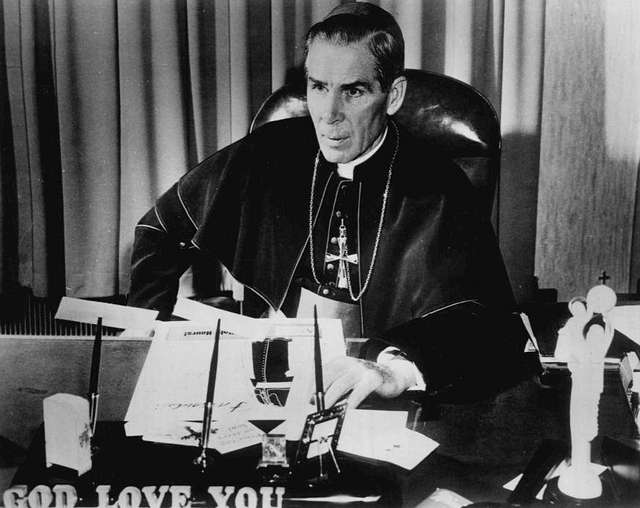
On Sept. 24, Catholics will celebrate a long-awaited moment in the life of the American Church: the beatification of Venerable Archbishop Fulton J. Sheen.
Known to millions for his television program Life Is Worth Living, Sheen was one of the most recognizable Catholic evangelists of the 20th century. His preaching covered everything from prayer and suffering to politics, science, family life, and the Eucharist.
While he was not an environmentalist in the contemporary sense, his work holds a deeply Catholic vision of creation that speaks powerfully to the ecological challenges of our own time. For Sheen, nature was never simply raw material for human use. Creation pointed beyond itself to its Creator.
“God was in love, but he could not keep the secret,” Sheen famously wrote. “The telling of it was creation.”
That simple image captures something at the heart of Catholic creation care — the natural world is not an accident, nor is it valuable only because of what humanity can extract from it. Creation is the work of God and bears witness to him.
Reading the “Book of Nature”
Sheen was fascinated by science and frequently incorporated scientific ideas into his preaching and writing. He did not see faith and science as enemies. Properly understood, he believed the study of creation could help humanity perceive the wisdom of its Creator.
Writing about the relationship between faith and science, Sheen described science as a way of reading the “Book of Nature.” Scientific discovery could reveal the extraordinary order of creation, but studying the book was not the same thing as knowing its Author.
This distinction matters for creation care.
The Catholic response to environmental problems cannot be reduced to data alone, important as scientific research is. Science can tell us what is happening to the climate, ecosystems, oceans, and atmosphere. Our faith helps us answer another question: What responsibilities do we have toward a world we did not create and do not ultimately own?
Sheen’s answer begins with recognizing creation as a gift.
Creation Has an Order
Sheen also repeatedly returned to the idea that creation possesses an order established by God. That idea has profound implications for the way human beings interact with the natural world. Human intelligence gives us extraordinary power to study, cultivate, and transform creation. But power does not mean absolute ownership.
For Sheen, nature and science were rightly placed at the service of humanity only when humanity itself remained oriented toward God. When human beings attempted to separate creation from its Creator, our technological power could become destructive rather than life-giving. Sheen warned that science divorced from God could become tyrannical. Technology is not morally self-directing. The fact that humanity can do something does not necessarily mean that we should.
That insight feels particularly relevant in an age capable of reshaping landscapes, altering ecosystems, and affecting the global climate on a scale Sheen could scarcely have imagined. Catholic creation care therefore asks more than whether something is technologically possible or economically profitable. It asks whether our choices respect the order of creation, protect human dignity and serve the common good.
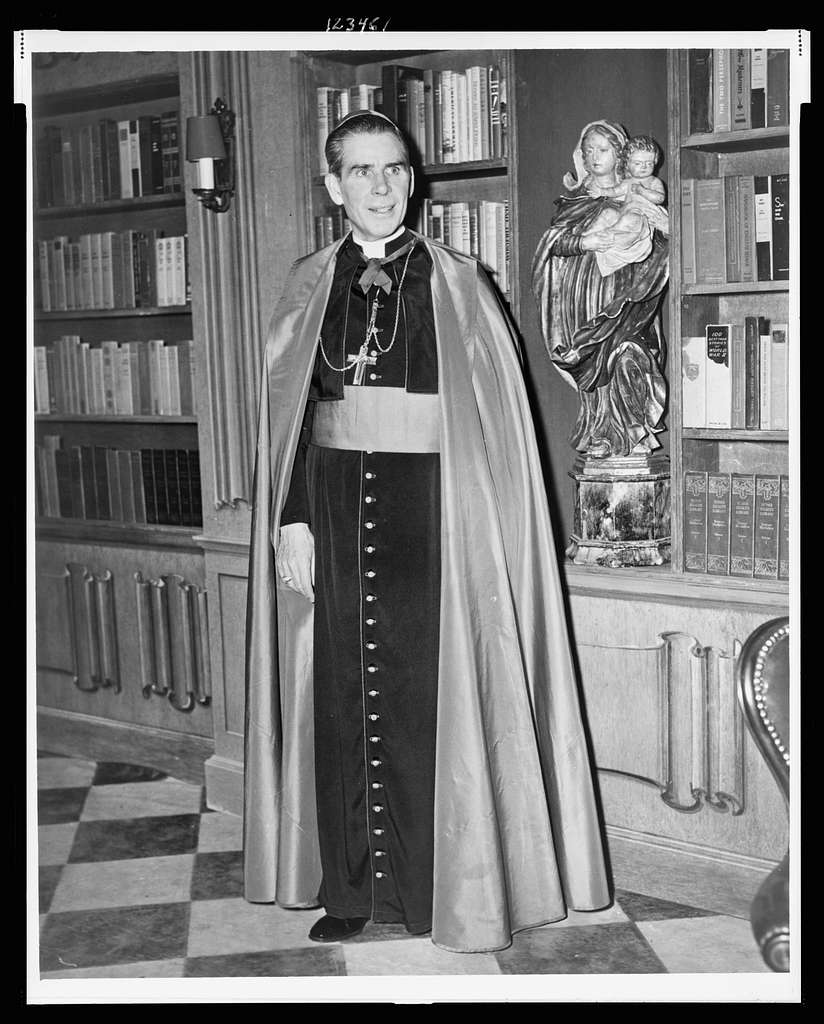
The Paschal Mystery Written Into Creation
One of Sheen’s most distinctive reflections on the natural world concerned what he called the “law of immolation.” Sheen saw throughout nature a pattern of life being given so that new life could emerge. Seeds disappear into the earth. Plants become nourishment for animals and people. Created things are transformed and elevated into new forms of life.
He saw in this natural pattern an echo of the Paschal Mystery. In his reflections on the Eucharist, Sheen pointed to the food on our tables. Plants must be harvested before they nourish us. Bread begins as wheat that is cut, ground, and subjected to fire. Grapes are crushed before becoming wine.
Creation itself teaches us that life is interconnected and dependent upon gift. For Christians, that pattern reaches its fulfillment in Christ, who gives himself for the life of the world. Creation care viewed through this lens is more than conservation. It is an invitation to reject a culture in which everything exists simply to be consumed. Instead, creation teaches reciprocity, restraint, gratitude, and sacrifice.
Sometimes caring for our common home means accepting limits. It can mean consuming less, wasting less, protecting what cannot be replaced, and sacrificing convenience for the good of our neighbors and future generations.
From Sheen to Laudato Si’
Decades after Sheen’s death, Pope Francis would articulate these themes explicitly in Laudato Si’.
“We are not God,” Pope Francis wrote. “The earth was here before us, and it has been given to us.”
That sentence could comfortably sit beside Sheen’s reflections on the Book of Nature. Both remind us that creation has a meaning independent of our desires. The Christian does not encounter a meaningless collection of resources, but a world received as a gift. And gifts call forth gratitude. Gratitude, in turn, changes the way we live.
When we understand water as a gift, pollution becomes more than an unfortunate side effect of economic activity. When forests, wildlife, and fertile soil are gifts, their destruction becomes more than an accounting problem. When the atmosphere is part of a common home shared with billions of neighbors, our responsibility cannot stop at the boundaries of our own property or nation.
Creation care becomes an expression of love of God and neighbor.
A Timely Legacy
On Thursday, Sept. 24, Sheen will be beatified during a Mass in St. Louis celebrated by Cardinal Luis Antonio Tagle, representing Pope Leo XIV.
Much will rightly be said about Sheen the evangelist, Sheen the broadcaster, Sheen the missionary, and Sheen the priest devoted to his daily Holy Hour.
We might also remember Sheen as a teacher who continually invited people to look at the created world and see more than matter. Look at creation closely enough, he suggested, and we begin to see order. Look more deeply, and we discover a gift. Look deeper still and creation points beyond itself toward God.
For Catholics working to protect our common home, Sheen’s approaching beatification offers an opportunity to recover that sacramental way of seeing the world. The environmental crises confronting us are scientific, economic, and political challenges. But they are spiritual challenges as well. They ask what creation is for, what human beings are for, and whether we will exercise our enormous technological power with humility.
Nearly half a century after his death, Fulton Sheen still offers a useful place to begin. Creation is telling us something. Our task is to learn how to listen.